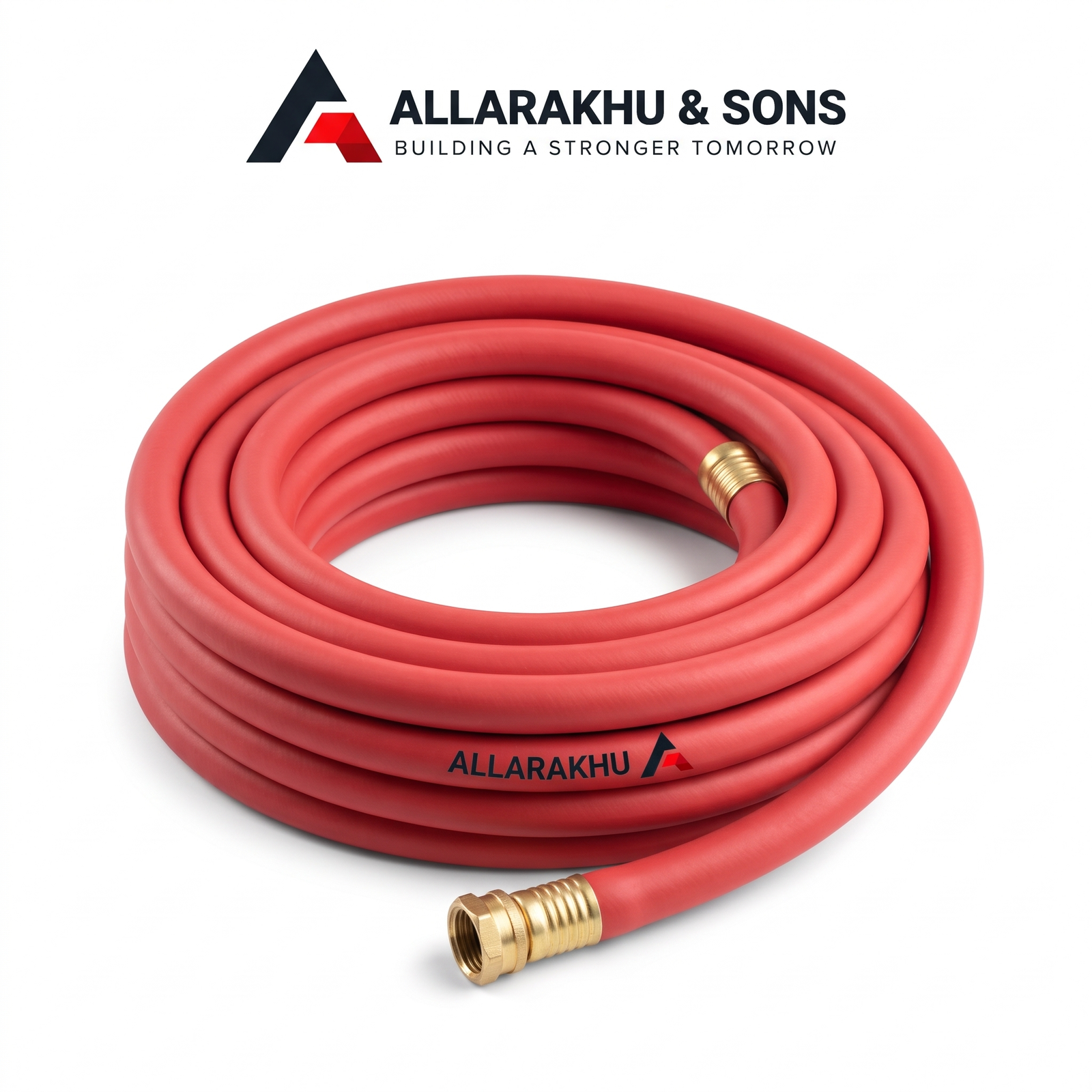
Rubber Hose for Industrial and Fluid Transfer Applications
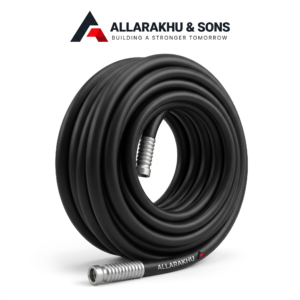
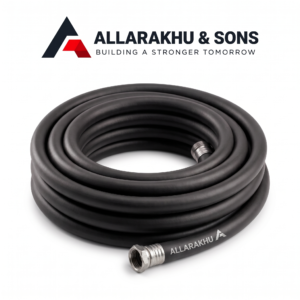
Rubber Hose is a flexible industrial product designed to transfer compatible liquids, gases and other materials between connected equipment and process points. Rubber hoses are used in manufacturing plants, workshops, construction sites, processing facilities and other industrial environments. Their suitability depends on the rubber compound, reinforcement, hose dimensions, operating pressure, temperature and the substance being conveyed.
Allarakhu & Sons, based in Surat, Gujarat, welcomes enquiries from industrial buyers looking for rubber hose solutions for their equipment and transfer systems. Buyers can share their application and technical requirements to identify an appropriate hose type for further confirmation.
Rubber Hose Product Overview
Rubber hoses are manufactured using different natural and synthetic rubber compounds to meet specific application requirements. The supplied manufacturer reference lists NBR, silicone, EPDM, Viton and SBR rubber compounds, with different hose constructions and reinforcement options.
Depending on the selected product, rubber hoses may be designed for air delivery, water transfer, oil handling, chemical transfer, steam service, welding applications, mud discharge and other industrial uses. Not every rubber compound or hose construction is suitable for every medium. Confirm the exact product’s technical datasheet before selecting it.
Key Features of Rubber Hose
- Flexible construction: Provides a flexible connection for compatible industrial transfer applications.
- Different rubber compounds: Product ranges may include NBR, EPDM, SBR, silicone and other specialised compounds.
- Reinforcement options: Depending on the hose design, reinforcement may include textile layers, PVC braiding or steel wire.
- Application-specific selection: Different hose types are designed for different transfer media and operating conditions.
- Multiple hose configurations: Available product ranges may include air, water, oil, chemical, steam and discharge hose categories.
- Industrial suitability: The selected hose must match the operating pressure, temperature and installation requirements.
Types of Rubber Hose
Rubber hoses are available in different configurations for specific industrial applications. The supplied manufacturer reference lists several categories, including the following. Actual availability through Allarakhu & Sons must be confirmed.
Air Rubber Hose
Air rubber hoses are used for conveying compressed air in compatible industrial systems, workshops and equipment. Select the hose according to the air pressure, temperature, required diameter and connection arrangement.
Water Rubber Hose
Water rubber hoses are used for selected water-transfer and supply applications. Depending on the design, a hose may be intended for delivery or another specified service. Confirm whether the application requires suction capability.
Oil Resistant Rubber Hose
Oil hoses use rubber compounds selected for compatibility with the intended oil or petroleum-based medium. The correct compound depends on the fluid type, temperature, concentration and operating conditions.
Chemical Rubber Hose
Chemical hoses are designed for specific chemical-transfer applications. The inner tube, reinforcement and end connections must be compatible with the chemical and its concentration. Always verify the chemical compatibility chart and technical datasheet.
Steam Rubber Hose
Steam hoses are specialised products intended for specified steam service conditions. They must be selected according to steam pressure, temperature, hose construction and applicable safety requirements. Never use a general-purpose rubber hose for steam unless the manufacturer specifically approves it.
Hot Water Rubber Hose
Hot-water hoses are selected for water-transfer applications involving elevated temperatures. Confirm the hose’s continuous and intermittent temperature limits before use.
Welding Rubber Hose
Welding hoses are designed for specified gas delivery applications used in welding operations. The hose must be suitable for the intended gas, pressure, colour identification and applicable safety standard.
Water Suction and Discharge Hose
Water suction and discharge hoses are used in compatible pumping and water-handling applications. A suction hose must have a construction and vacuum rating suitable for the required service. A delivery hose must meet the discharge pressure requirements.
Mud Discharge Rubber Hose
Mud discharge hoses are used in selected applications involving the transfer of mud and similar materials. Confirm the required abrasion resistance, hose construction, pressure and material compatibility.
Textile Reinforced Rubber Hose
Textile reinforcement is used in selected hose constructions to provide structural support. The number and type of reinforcement layers, pressure rating and flexibility depend on the specific product design.
Rubber Hose Material Options
The rubber compound determines important properties such as compatibility with the conveyed medium, temperature performance and resistance to the operating environment. The supplied manufacturer reference identifies several rubber compounds.
- NBR (Nitrile Butadiene Rubber): Used in selected applications where compatibility with oils and petroleum-based fluids is required. Confirm suitability for the exact fluid.
- EPDM (Ethylene Propylene Diene Monomer): Used in selected water, hot-water and weather-exposed applications. Confirm compatibility with the transferred medium.
- SBR (Styrene Butadiene Rubber): Used in certain general-purpose rubber products. Suitability depends on the formulation and application.
- Silicone rubber: Used in specialised applications where its material properties meet the operating requirements. Confirm the relevant temperature and media compatibility.
- Viton / FKM: Used in selected applications requiring specialised chemical and temperature compatibility. Confirm the exact compound and manufacturer limits.
These are general material descriptions. The actual compound, grade and suitability of any Allarakhu & Sons product must be confirmed before ordering.
Rubber Hose Reinforcement and Construction
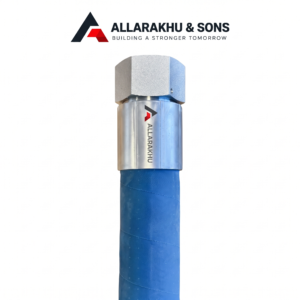
Rubber hose construction varies according to its intended application. A typical reinforced hose may include an inner rubber tube, reinforcement layers and an outer protective cover.
- Inner tube: The layer that contacts the transferred medium. Its rubber compound must be compatible with the application.
- Textile reinforcement: Provides structural support in selected hose designs.
- Steel wire reinforcement: Used in selected constructions where additional structural or pressure performance is required.
- PVC braided reinforcement: Listed in the manufacturer reference as an available construction option for certain hose products.
- Outer cover: Protects the hose against the external environment according to the product design.
Not every rubber hose contains all these layers. Confirm the actual construction from the selected product’s datasheet.
Rubber Hose Technical Specifications
The product technical data supplied for this Allarakhu & Sons listing is blank. Therefore, the following specifications must be confirmed for the exact rubber hose before purchase.
- Rubber compound: Confirm with supplier.
- Inner diameter: Confirm with supplier.
- Outer diameter: Confirm with supplier.
- Wall thickness: Confirm with supplier.
- Reinforcement type: Confirm with supplier.
- Number of reinforcement layers: Confirm with supplier.
- Working pressure: Confirm with supplier.
- Burst pressure: Confirm with supplier.
- Operating temperature: Confirm with supplier.
- Vacuum rating: Confirm with supplier for suction applications.
- Hose length: Confirm with supplier.
- Colour: Confirm with supplier.
- End connection: Confirm with supplier.
- Applicable standard: Confirm with supplier.
- Certifications and approvals: Confirm with supplier.
Rubber Hose Size Range
Rubber hose dimensions vary according to the selected product category and application. The required inner diameter should be selected according to the flow requirement, while the outer diameter and wall thickness must suit the installation and connection arrangement.
Available diameters, standard lengths, cut lengths and custom configurations must be confirmed with the supplier. Do not assume that a size listed for one hose type is available for another.
Rubber Hose Pressure and Temperature Range
Working pressure and temperature limits are specific to each rubber hose design. A water hose, air hose, chemical hose and steam hose may have different operating limits even when their dimensions are similar.
Before selecting a rubber hose, confirm:
- Normal operating pressure.
- Maximum operating pressure and possible pressure surges.
- Minimum and maximum operating temperature.
- Transferred medium and its concentration.
- Required suction or vacuum performance.
- External environmental exposure.
- Required service life and operating frequency.
Important: No universal pressure or temperature rating is specified for this Allarakhu & Sons listing. Obtain the selected hose’s technical datasheet before installation or operation.
Rubber Hose Applications
Rubber hoses serve different industrial applications when the selected compound and construction are suitable for the operating conditions.
- Manufacturing units: Selected air, water and fluid-transfer requirements.
- Engineering workshops: Compatible air delivery and general industrial applications.
- Construction sites: Selected water, mud and material discharge applications.
- Oil handling: Transfer applications using a compatible oil-resistant hose.
- Chemical processing: Chemical transfer using a hose with verified material compatibility.
- Food processing: Only hoses with the required food-contact suitability and supporting documentation.
- Welding operations: Gas delivery using an approved welding hose for the intended gas.
- Power and utility facilities: Selected industrial air, water and fluid handling applications.
- Agricultural operations: Suitable water-transfer and other approved hose applications.
How to Select the Right Rubber Hose
Choosing the correct rubber hose requires matching the hose construction to the actual operating conditions. Review these points before requesting a quotation.
- Identify the transferred medium: Specify air, water, oil, fuel, chemical, steam, mud or another material.
- Confirm rubber compatibility: Select a suitable rubber compound for the fluid and operating environment.
- Determine the hose size: Provide the required inner diameter and outer diameter if known.
- Check operating pressure: Share normal and maximum working pressure.
- Confirm temperature: Provide minimum and maximum operating temperatures.
- Choose reinforcement: Identify whether textile, wire or another specified construction is required.
- Identify the service: Specify suction, discharge, delivery, compressed air or another operating condition.
- Check end connections: Share the required coupling, fitting or connection details.
- Verify standards: Request the applicable technical datasheet, test report and certificates where required.
Industrial Buyer Guide
Procurement teams, maintenance departments, plant engineers and contractors should provide complete details when requesting a rubber hose quotation.
- Application or equipment name.
- Type of material being conveyed.
- Required rubber compound, if specified.
- Inner and outer diameter.
- Required hose length and quantity.
- Working and maximum pressure.
- Operating temperature range.
- Suction or discharge requirement.
- Reinforcement construction.
- Required coupling or end connection.
- Applicable standard or certification.
- Delivery location and expected procurement schedule.
Providing these details helps the supplier review the requirement and confirm an appropriate product for the intended application.
Rubber Hose Supplier in Surat, Gujarat
Allarakhu & Sons is based in Surat, Gujarat, and welcomes enquiries from industrial buyers looking for rubber hose products. Businesses can share their application, hose dimensions, rubber compound, reinforcement and operating requirements to enquire about suitable options.
Industrial buyers from Surat GIDC, Sachin GIDC, Pandesara, Udhna, Hazira, Palsana and Kadodara can contact Allarakhu & Sons for product enquiries. Enquiries from Ankleshwar GIDC, Bharuch GIDC and Vapi GIDC are also welcome.
Rubber Hose Enquiries Across India
Allarakhu & Sons welcomes industrial product enquiries from Surat, Delhi, Mumbai, Bengaluru, Pune, Hyderabad, Ahmedabad, Jaipur, Chennai, Chandigarh, Lucknow, Goa, Indore, Nagpur, Dehradun, Kochi, Shimla, Srinagar, Noida and Gurugram.
For enquiries from across India, share the required rubber hose type, application, dimensions, quantity and delivery location. Product availability, specifications, pricing and dispatch arrangements must be confirmed before ordering.
Why Contact Allarakhu & Sons for Rubber Hose?
- Surat-based supplier for industrial product enquiries.
- Enquiry support for different rubber hose applications.
- Application-focused discussion of hose material and construction.
- Opportunity to share technical requirements before ordering.
- Enquiries welcomed from Gujarat and other Indian industrial markets.
Request a Quote for Rubber Hose
Looking for rubber hose for your factory, workshop, construction project or processing unit? Contact Allarakhu & Sons with your required hose application, rubber compound, diameter, length, working pressure and temperature details.
Share your technical requirements or product reference to enquire about suitable rubber hose options, specifications, availability and pricing.
ALLARAKHU & SONS
A-3, 7/4720, Badri Mansion, Lal Darwaja Station Road, Surat – 395003, Gujarat, India.
Phone: +91 98251 78797 / +91 84011 31000
Frequently Asked Questions About Rubber Hose
What is a rubber hose used for?
A rubber hose is used to transfer compatible liquids, gases and other materials in industrial and commercial applications. Common categories include air, water, oil, chemical, steam and discharge hoses.
What materials are used to manufacture rubber hoses?
Rubber hose ranges may use NBR, EPDM, SBR, silicone, Viton or other specialised compounds. The correct material depends on the transferred medium and operating conditions.
What types of rubber hoses are available?
Depending on the product range, types may include air hoses, water hoses, oil hoses, chemical hoses, steam hoses, welding hoses, hot-water hoses and water suction or discharge hoses.
What is the difference between NBR and EPDM rubber hoses?
NBR and EPDM are different rubber compounds with different compatibility characteristics. NBR is commonly considered for selected oil-related applications, while EPDM is used in selected water and weather-exposed applications. Confirm suitability for the exact fluid and temperature before selection.
Are rubber hoses suitable for chemical transfer?
Some rubber hoses are designed for specific chemical-transfer applications. Suitability depends on the chemical, concentration, temperature, pressure and hose lining. Always confirm compatibility with the manufacturer.
What is a textile reinforced rubber hose?
A textile reinforced rubber hose includes textile reinforcement within its construction. The reinforcement supports the hose structure, while the exact pressure and flexibility characteristics depend on the product design.
How do I choose the correct rubber hose size?
Identify the required flow, inner diameter, outer diameter, hose length and connection arrangement. Confirm the selected size against the equipment and manufacturer’s technical datasheet.
What information is required for a rubber hose quotation?
Provide the application, transferred medium, rubber compound if known, hose diameter, length, pressure, temperature, reinforcement type, connection details and required quantity.
Does Allarakhu & Sons supply rubber hoses in Surat?
Allarakhu & Sons is based in Surat, Gujarat. Contact the company to confirm the required rubber hose type, specifications, availability and quotation.
Can I enquire about rubber hoses from other Indian cities?
Yes. Industrial buyers from different Indian cities can share their rubber hose requirements and delivery location to enquire about suitable products and supply arrangements.