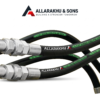
Hose Fittings
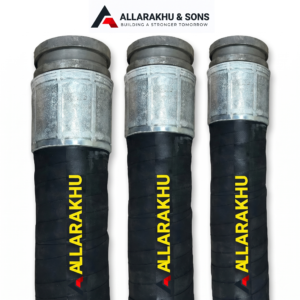
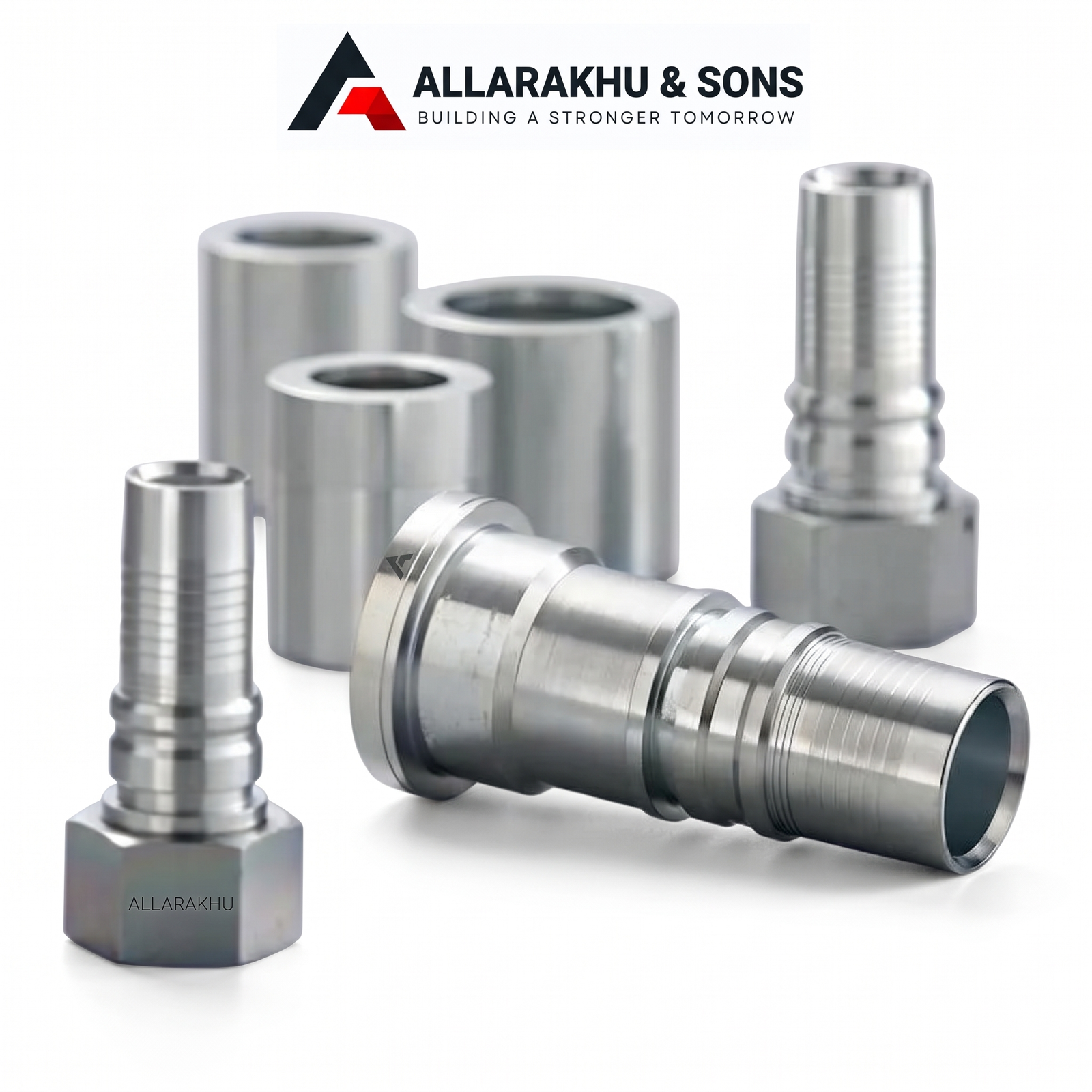
Hose Fittings are essential connection components used to join compatible hoses with hydraulic equipment, pipelines, valves and other fluid power system components. They provide the required connection interface between the hose and the equipment, helping create a suitable fluid-transfer arrangement.
Selecting the correct hose fitting requires attention to hose construction, internal diameter, fitting design, thread type, sealing arrangement and operating pressure. Allarakhu & Sons caters to industrial buyers looking for hose fittings and hydraulic connection components for different equipment and maintenance requirements. Share your technical details to confirm the suitable fitting configuration.
Hose Fittings Product Overview
Hose fittings are designed to connect a compatible hose to a hydraulic system or equipment connection point. The fitting must match the hose construction and the connection interface to provide a suitable mechanical and fluid connection.
Hydraulic hose fittings are available in different configurations for braided and spiral reinforced hoses. The required fitting series depends on the hose design, reinforcement, pressure requirements and assembly method.
The supplied manufacturer reference describes standard, high-pressure and interlock fitting configurations. It also identifies several connection systems, including BSP, DIN, JIC, ORFS, NPT and UNF.
Key Features of Hose Fittings
- Connection compatibility: Designed to connect compatible hoses with hydraulic equipment and fluid power components.
- Different thread systems: Available fitting systems in the source reference include BSP, DIN, JIC, ORFS, NPT and UNF.
- Multiple hose constructions: Fitting configurations are described for braided and spiral reinforced hoses.
- Pressure-based selection: Different fitting series are intended for different operating pressure requirements.
- Assembly compatibility: The fitting and ferrule arrangement must match the selected hose and assembly method.
- Material options: The source range includes acid-resistant fitting options. Exact material availability must be confirmed.
- Surface protection options: The source describes a proprietary coating for corrosion protection on its own fittings.
Types of Hydraulic Hose Fittings
Hydraulic hose fittings are available in different designs to match hose construction and application conditions. The source manufacturer’s reference divides its fittings into three main series.
Standard Hose Fittings – H12 Series Reference
The H12 series described by the source manufacturer is intended for both braided and spiral-wound hoses in applications with normal pressure requirements.
The reference describes a skive-free system, with external skiving for spiral-wound hose applications. Confirm the exact fitting and hose compatibility before selecting this configuration.
Powertrak Hose Fittings – H18 Series Reference
The H18 Powertrak series is described for spiral-wound hoses used in demanding high-pressure applications. The source specifies a skive-free system for this fitting series.
The fitting must be matched with the specified hose construction and the manufacturer’s assembly requirements. Do not assume that this series is suitable for every spiral hose.
Interlock Hose Fittings – H17 Series Reference
The H17 Interlock series is described for spiral-wound hoses used in applications involving demanding high and pulsating pressure conditions.
The source identifies internal and external skiving for this fitting arrangement. The correct hose, fitting and ferrule combination must be confirmed before assembly.
Important: H12, H18 and H17 are source-manufacturer series references. Their availability, compatibility and specifications for Allarakhu & Sons enquiries must be confirmed separately.
Hose Fitting Thread and Connection Types
Hydraulic hose fittings are available with different thread and connection systems. The correct type must match the equipment port, adapter or hydraulic connection point.
BSP Hose Fittings
BSP fittings use the British Standard Pipe thread system. The required BSP configuration, sealing arrangement and connection dimensions must be confirmed before ordering.
DIN Hose Fittings
DIN hydraulic fittings follow the applicable DIN connection specifications. The correct fitting design and mating connection must be identified from the equipment requirements.
JIC Hose Fittings
JIC fittings use a 37-degree flare connection. Correct thread and flare identification is necessary to match the fitting with the corresponding port or adapter.
ORFS Hose Fittings
ORFS stands for O-Ring Face Seal. This connection system uses a sealing arrangement at the fitting face. Confirm the correct seal, fitting dimensions and mating connection.
NPT Hose Fittings
NPT is a tapered pipe thread system used in compatible fluid connections. Check the thread specification and sealing requirements before selecting an NPT fitting.
UNF Hose Fittings
UNF refers to Unified National Fine threads. Confirm the exact thread size, pitch and connection design to ensure compatibility with the required equipment.
Hose Fittings Materials and Surface Protection
Fitting material selection depends on the operating environment, conveyed fluid, pressure requirements and corrosion exposure.
The supplied manufacturer reference describes its own fitting range with ATC (Alfagomma Top Coat), a proprietary coating developed by the Alfagomma Group. The source states that this coating is designed to improve corrosion resistance against red rust.
The source also identifies acid-resistant fittings as part of its product range. Exact fitting materials, coating options and corrosion-resistance performance must be confirmed for the selected product.
Do not assume that every hose fitting is stainless steel, acid-resistant or supplied with a particular coating. Confirm the actual material and surface treatment before purchase.
Hose Ferrules and Fitting Assembly
Hose ferrules are components used with compatible crimp fitting systems to secure the fitting to the hose. The ferrule and fitting must be designed for the specific hose construction and assembly process.
The source manufacturer’s brochure states that its own crimp fittings and ferrules are developed and tested for use together. This is a source-manufacturer statement and should not be treated as a verified claim about every fitting supplied by Allarakhu & Sons.
Before assembly, confirm:
- Hose type and reinforcement construction
- Fitting series and compatible ferrule
- Required hose insertion depth
- Skiving or no-skive assembly requirement
- Specified crimp diameter
- Approved crimping equipment and procedure
- Required inspection and testing procedure
Hose Fittings Technical Specifications
The product technical data has not been provided. Use the following table to confirm the required fitting details before placing an order.
| Specification | Product information |
|---|---|
| Product name | Hose Fittings |
| Fitting type | Confirm with supplier |
| Fitting series | Confirm with supplier |
| Compatible hose construction | Confirm with supplier |
| Connection type | Confirm with supplier |
| Thread standard | Confirm with supplier |
| Thread size and pitch | Confirm with supplier |
| Fitting material | Confirm with supplier |
| Surface treatment | Confirm with supplier |
| Hose internal diameter compatibility | Confirm with supplier |
| Ferrule compatibility | Confirm with supplier |
| Working pressure suitability | Confirm with supplier |
| Assembly method | Confirm with supplier |
| Applicable standard | Confirm with supplier |
Applications of Hose Fittings
Hydraulic hose fittings are used wherever a compatible hose connection is required within a hydraulic fluid power system. Depending on the selected fitting design and verified rating, application areas may include:
- Industrial hydraulic machinery
- Hydraulic power packs
- Construction and earthmoving equipment
- Agricultural machinery
- Material handling equipment
- Manufacturing and production machinery
- Hydraulic pumps and valves
- Hydraulic cylinders and actuators
- Mobile hydraulic equipment
- Industrial maintenance and replacement connections
These are general application categories. Confirm the selected fitting’s material, connection, pressure suitability and compatibility before using it in a specific system.
How to Select the Correct Hose Fittings
Correct fitting selection helps avoid thread mismatch, unsuitable sealing arrangements and incompatible hose connections. Consider the following points when preparing your enquiry.
- Identify the hose: Confirm the hose type, construction and internal diameter.
- Check the connection: Identify whether the equipment requires BSP, DIN, JIC, ORFS, NPT, UNF or another connection.
- Measure the thread: Confirm thread diameter, pitch and profile using suitable identification methods.
- Confirm the fitting angle: Specify straight, 45-degree, 90-degree or another required configuration, if applicable.
- Check the pressure requirement: Match the fitting with the hose and system’s rated operating conditions.
- Confirm the material: Consider the operating environment and corrosion exposure.
- Check ferrule compatibility: Use the correct fitting and ferrule combination for the selected hose.
- Confirm assembly requirements: Follow the manufacturer’s specified installation and crimping procedure.
Common Hose Fitting Selection Mistakes
- Selecting a fitting based only on its apparent thread diameter.
- Mixing BSP, NPT, JIC, DIN or other incompatible thread systems.
- Using a fitting that is not approved for the selected hose construction.
- Choosing a fitting without checking its pressure suitability.
- Using an incompatible ferrule or assembly method.
- Ignoring the required sealing arrangement.
- Assuming that all fittings with similar dimensions are interchangeable.
For critical hydraulic connections, confirm fitting identification and assembly requirements from the relevant technical documentation. Do not force incompatible threads or connections together.
Hose Fittings Supplier in Surat, Gujarat
Allarakhu & Sons is based in Surat, Gujarat, and caters to industrial product enquiries from businesses, contractors, maintenance teams and procurement departments. Buyers looking for hose fittings and hydraulic connection components can share their fitting type, thread details, hose size and application requirements.
Industrial buyers from Surat and surrounding manufacturing areas, including Surat GIDC, Sachin GIDC, Pandesara, Udhna, Hazira, Palsana and Kadodara, can contact the team for product enquiries. Requirements from Ankleshwar GIDC, Bharuch GIDC and Vapi GIDC are also welcome.
Hose Fittings Enquiries Across India
Allarakhu & Sons welcomes industrial hose fitting enquiries from businesses across India. Buyers from Surat, Ahmedabad, Mumbai, Delhi, Pune, Bengaluru, Hyderabad, Jaipur, Chennai, Chandigarh, Lucknow, Goa, Indore, Nagpur, Dehradun, Kochi, Shimla, Srinagar, Noida and Gurugram can share their requirements.
Provide the fitting type, thread standard, size, material and application to help confirm product availability and commercial details.
Enquire About Hose Fittings
Looking for hose fittings for hydraulic machinery, equipment or fluid power connections? Contact Allarakhu & Sons with your hose specifications and connection details. The team can review your enquiry and confirm the available fitting options.
Business: Allarakhu & Sons
Address: A-3, 7/4720, Badri Mansion, Lal Darwaja Station Road, Surat – 395003, Gujarat, India.
Phone: +91 98251 78797 / +91 84011 31000
Website: allarakhuandsons.in
Frequently Asked Questions
What are hose fittings?
Hose fittings are connection components used to join a compatible hose to equipment, pipelines or other system components. In hydraulic systems, they provide the connection between the hose and the relevant fluid power equipment.
What are the different types of hydraulic hose fittings?
Hydraulic hose fittings are available in different designs for braided and spiral reinforced hoses. The source reference describes standard, Powertrak and Interlock fitting series for different application and pressure requirements.
What thread types are used in hydraulic hose fittings?
Common thread and connection systems include BSP, DIN, JIC, ORFS, NPT and UNF. The correct type depends on the equipment port and the required fitting connection.
What is the difference between JIC and ORFS fittings?
JIC fittings use a 37-degree flare connection, whereas ORFS fittings use an O-ring face seal arrangement. They have different sealing designs and are not interchangeable without the correct matching connection.
What is a hose ferrule?
A hose ferrule is a component used with compatible hose fitting systems to secure the fitting to the hose. The correct ferrule must match the hose, fitting and approved assembly method.
What are acid-resistant hose fittings?
Acid-resistant fittings are designed for applications where resistance to certain corrosive environments is required. Confirm the exact material and chemical compatibility for the intended application before selection.
How do I identify the correct hose fitting?
Identify the hose construction, internal diameter, fitting shape, thread type, thread size, pitch and sealing arrangement. Equipment documentation or an accurate fitting sample can help confirm the correct connection.
Can all hose fittings be used with every hydraulic hose?
No. A fitting must be compatible with the hose construction, dimensions, pressure requirements and assembly method. Always check the manufacturer’s compatibility information before use.
Where can I enquire about hose fittings in Surat?
You can contact Allarakhu & Sons in Surat, Gujarat, for hose fitting enquiries. Share your required fitting type, thread details, hose size and application to confirm product availability.