

Steam Trap Valve Manufacturer in Surat
Steam Trap Valve Manufacturer in Surat, Allarakhu and Sons provides industrial valve solutions for steam, condensate and process applications. Steam traps are used in steam systems to discharge condensate and other unwanted non-condensable gases while helping retain live steam within the system. The correct trap selection can support efficient heat transfer, equipment protection and reliable steam-system operation.
Allarakhu and Sons serves industrial customers in Surat, Gujarat and across India with industrial valves, pipes, pipe fittings, hose pipes and related engineering products. Customers can enquire about suitable steam trap solutions by providing the required size, pressure rating, temperature, material, connection type, steam application and quantity.
The company supports enquiries from industrial plants, engineering contractors, procurement teams, maintenance departments, manufacturers and process industries. Contact Allarakhu and Sons for steam trap requirements and quotation assistance.
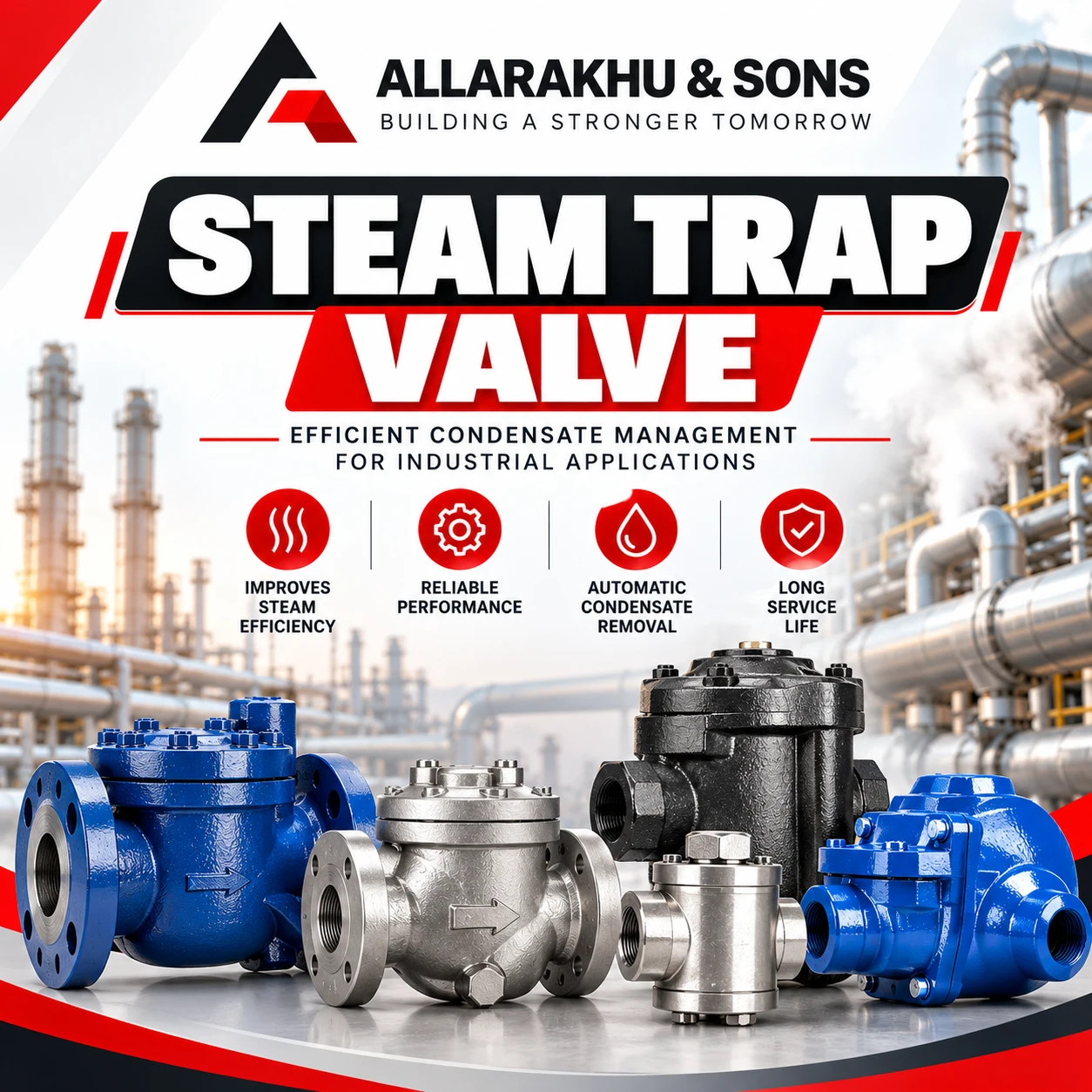
Industrial Steam Trap Valve Solutions
A steam trap is an automatic device used in steam systems to remove condensate while helping prevent unnecessary loss of live steam. Condensate forms when steam gives up heat and changes from vapour into liquid. If condensate is not removed effectively, it can affect heat-transfer performance and may contribute to operational problems in steam distribution and process equipment.
Allarakhu and Sons provides industrial product solutions for businesses looking for a Steam Trap Valve Manufacturer in Surat and industrial valve supplier for steam and process applications. The appropriate steam trap depends on the operating pressure, temperature, condensate load, steam conditions, piping arrangement and application.
What Is a Steam Trap?
A steam trap is an automatic valve designed to discharge condensate from a steam system while limiting the escape of live steam. Depending on the design, a steam trap can also provide a means of removing air and other non-condensable gases from the system.
Steam traps are installed at suitable points in steam distribution systems, steam mains, drip legs, heat exchangers, heating equipment, process equipment and other locations where condensate needs to be removed.
The correct steam trap can help maintain effective heat transfer, support equipment performance and improve condensate management. Selection should always be based on the actual operating conditions of the installation.
How Does a Steam Trap Work?
The operating principle varies according to the type of steam trap. Mechanical traps respond primarily to differences in density, thermostatic traps respond to temperature, and thermodynamic traps operate according to pressure and flow effects within the trap.
When condensate reaches the trap, the internal mechanism responds according to the trap design and allows the condensate to leave the steam system. When steam reaches the trap, the mechanism changes position to restrict the passage of live steam.
The exact opening and closing behaviour depends on the design, pressure differential, temperature, condensate load and operating conditions.
Types of Steam Traps
Industrial steam traps are available in several designs. The most suitable type depends on the steam system, equipment, pressure, temperature and condensate discharge requirements.
- Thermodynamic Steam Trap
- Thermostatic Steam Trap
- Ball Float Steam Trap
- Float and Thermostatic Steam Trap
- Inverted Bucket Steam Trap
- Bimetallic Steam Trap
- Special-purpose steam traps
Each design has different operating characteristics. A trap suitable for a steam main may not be the right choice for a heat exchanger or process-heating application.
Thermodynamic Steam Trap
A thermodynamic steam trap uses the dynamic effects associated with steam, condensate and pressure changes to control discharge. These traps are commonly considered for steam-main drainage, drip-leg applications and other suitable industrial steam services.
Thermodynamic designs are often compact and can be selected for applications where a robust steam-trapping solution is required. Actual performance depends on the design, pressure range, installation conditions and condensate load.
When selecting a thermodynamic steam trap, customers should provide the steam pressure, differential pressure, temperature, pipe size, connection requirement and intended application.
Thermostatic Steam Trap
A thermostatic steam trap operates according to temperature differences between steam, condensate and non-condensable gases. A temperature-sensitive element controls the valve mechanism and allows suitable discharge according to the operating conditions.
Thermostatic steam traps can be considered for applications where temperature-based condensate discharge is appropriate. The required trap should be selected according to the process temperature, pressure and condensate characteristics.
Ball Float Steam Trap
A ball float steam trap uses a float mechanism that responds to the level of condensate inside the trap. As condensate enters the trap, the float position changes and operates the discharge mechanism.
Ball float designs can be suitable for applications requiring continuous or responsive condensate discharge. They are commonly considered for process equipment, heating systems and suitable heat-transfer applications.
Selection should take account of condensate load, pressure differential, temperature, steam conditions and required capacity.
Float and Thermostatic Steam Trap
A float and thermostatic steam trap combines a float-operated condensate discharge mechanism with a thermostatic air-venting element. This configuration can be useful in applications where effective condensate removal and air discharge are both important.
These traps may be considered for heat exchangers, process heating equipment, heating coils and other steam applications with changing condensate loads.
Inverted Bucket Steam Trap
An inverted bucket steam trap uses an inverted bucket mechanism to distinguish between steam and condensate. The movement of the bucket operates the discharge mechanism according to the conditions inside the trap.
Inverted bucket designs can be used in suitable steam drainage and process applications. Correct installation and adequate operating conditions are important for reliable performance.
Bimetallic Steam Trap
A bimetallic steam trap uses temperature-sensitive bimetallic elements to control condensate discharge. Changes in temperature cause the elements to move and operate the valve mechanism.
This type of steam trap may be considered where controlled discharge of condensate according to temperature is suitable for the application.
Steam Trap Applications
Steam traps are used across many industries where steam is used for heating, processing, drying, sterilisation or utility operations.
- Steam distribution lines
- Steam mains
- Boiler systems
- Heat exchangers
- Heating coils
- Process heating equipment
- Steam tracing systems
- Dryers
- Jacketed vessels
- Steam separators
- Industrial heaters
- Manufacturing equipment
- Condensate recovery systems
Steam Trap for Boiler Systems
Steam systems connected with boilers require suitable condensate management at different points in the steam distribution network. Steam traps may be installed at appropriate drainage points to remove accumulated condensate.
The correct product depends on the pressure, temperature, condensate load, piping arrangement and specific boiler-system requirements. Steam traps should not be selected only on the basis of pipe size.
Steam Trap for Steam Pipelines
Steam pipelines can accumulate condensate during startup and normal operation. Properly positioned drainage points and suitable steam traps help manage condensate within the steam distribution system.
Steam-main applications require consideration of pressure, temperature, drainage capacity, installation location, steam quality and the expected condensate load.
Steam Trap for Heat Exchangers
Heat exchangers can generate condensate as steam transfers heat to another fluid or process. Effective condensate removal is important for maintaining the intended heat-transfer conditions.
The appropriate trap type depends on the heat exchanger design, steam pressure, temperature, condensate load, control-valve arrangement and required drainage behaviour.
Steam Trap for Process Industries
Process industries often use steam for heating, drying, sterilisation and temperature control. Steam traps can form an important part of the condensate-management system associated with this equipment.
Chemical, pharmaceutical, textile, food-processing, paper, engineering and manufacturing plants may have different steam-system requirements. Product selection should therefore be based on the actual process conditions.
Steam Trap for Textile Industry
The textile industry uses steam in several heating and processing operations. Steam traps can be installed in appropriate steam and condensate systems associated with process equipment, heating systems and utility lines.
For textile applications, the selection should consider operating pressure, temperature, condensate quantity, equipment configuration and the required discharge characteristics.
Steam Trap for Chemical Industry
Chemical plants may operate steam systems under demanding pressure, temperature and process conditions. Steam traps used in these environments must be compatible with the service conditions and process requirements.
Material compatibility, pressure rating, temperature rating, connection type and process media should be considered when specifying a steam trap for chemical applications.
Steam Trap for Pharmaceutical Industry
Pharmaceutical manufacturing can involve steam for heating, process operations and suitable utility systems. Steam-trapping requirements vary according to the equipment, steam quality and application.
Where clean or hygienic steam is involved, the valve and trap specifications should be selected according to the applicable process and installation requirements.
Steam Trap for Power Plants
Power-generation facilities contain extensive steam and condensate systems. Steam traps can be used at suitable drainage points and auxiliary steam-system applications.
Power-plant applications require careful consideration of pressure, temperature, materials, connection standards and operating conditions before selecting the trap configuration.
Steam Trap for Manufacturing Plants
Manufacturing plants may use steam for heating, drying, cleaning, processing and other utility requirements. Steam traps help manage condensate generated throughout these systems.
Allarakhu and Sons can receive enquiries from manufacturing companies requiring industrial valves and related products for plant maintenance, replacement or project requirements.
How to Select the Right Steam Trap
Choosing a suitable steam trap requires more than selecting a product based on its name. The complete operating conditions should be evaluated before purchase.
- Steam pressure
- Operating temperature
- Differential pressure
- Condensate load
- Steam flow conditions
- Pipe size
- Connection type
- Valve and trap material
- Installation location
- Drainage requirements
- Application type
- Required discharge capacity
- Maintenance requirements
- Operating environment
Providing complete technical information helps the supplier identify a suitable product configuration and reduces the risk of selecting an unsuitable trap.
Steam Trap Material Selection
Steam trap materials should be selected according to pressure, temperature, steam conditions, corrosion requirements and the overall piping specification.
Depending on the product design and application, industrial steam traps may be available in stainless steel, cast iron, cast steel, carbon steel and other suitable materials.
For demanding applications, customers should specify the required body material, internal components, seat material and other technical requirements in their enquiry.
Steam Trap Pressure and Temperature
Pressure and temperature are important factors when selecting an industrial steam trap. The trap must be suitable for the pressure differential and operating temperature of the installation.
A trap intended for one pressure range should not automatically be used in another application without checking its technical specifications.
For an accurate recommendation, customers should provide normal operating pressure, maximum pressure, operating temperature and expected condensate load wherever possible.
Steam Trap Connection Types
Steam traps can be supplied with different connection configurations depending on the product design and piping system.
Common industrial connection arrangements may include screwed, threaded, flanged, socket-weld and other specified connections.
The required connection should match the existing pipeline, installation standard and project specification. Customers should mention the required connection type while requesting a quotation.
Steam Trap Size Selection
Steam trap size should be selected according to the required condensate discharge capacity rather than simply matching the nominal pipe size.
The condensate load, differential pressure, steam pressure, startup load and equipment characteristics can affect the required trap capacity.
Providing the application and operating data allows the required trap specification to be assessed more accurately.
Steam Trap Manufacturer in Surat
Allarakhu and Sons is based in Surat, Gujarat, and serves industrial customers looking for valves, pipes, pipe fittings, hose pipes and related industrial products.
Businesses searching for a Steam Trap Valve Manufacturer in Surat can contact Allarakhu and Sons with their technical requirements. The company can discuss industrial steam trap requirements based on the application, specifications and quantity requested.
Customers should provide the required trap type, size, pressure rating, material, connection, operating temperature, steam application and quantity for quotation assistance.
Steam Trap Valve Supplier in Surat
Allarakhu and Sons also handles industrial product enquiries from businesses looking for a Steam Trap Valve Supplier in Surat. The company serves B2B customers including industrial plants, manufacturers, contractors, maintenance teams, engineering companies and procurement departments.
For faster enquiry processing, customers can share their technical specification or requirement list along with the delivery location and quantity.
Steam Trap Supplier in Gujarat
Gujarat has a large industrial base covering chemical, pharmaceutical, textile, engineering, manufacturing, petrochemical and process industries. Steam systems are used across many of these sectors for heating and process operations.
Allarakhu and Sons is located in Surat and can receive industrial steam trap enquiries from customers across Gujarat, including Surat, Ahmedabad, Vadodara, Bharuch, Ankleshwar, Vapi, Valsad, Rajkot, Jamnagar, Gandhinagar and other industrial locations.
Steam Trap Requirements in Surat GIDC
Surat and its surrounding industrial areas include manufacturing, textile, engineering, chemical and processing businesses that may use steam and industrial utility systems.
Industrial enquiries can originate from Sachin GIDC, Pandesara GIDC, Udhna, Hazira, Palsana, Kadodara and other industrial areas around Surat. Steam trap selection should always be based on the equipment and operating conditions of the individual plant.
Steam Trap Requirements in Ankleshwar and Bharuch
Ankleshwar GIDC and the wider Bharuch industrial region have significant chemical, engineering and manufacturing activity. Steam and condensate-management equipment may form part of industrial utility and process systems in these facilities.
Businesses in Ankleshwar, Bharuch and nearby industrial zones can contact Allarakhu and Sons with their steam trap specifications, quantity and delivery requirements.
Steam Trap Requirements in Vapi GIDC
Vapi GIDC and the surrounding industrial region include chemical, pharmaceutical, engineering, textile and manufacturing businesses. These industries may require steam traps for suitable process heating and utility applications.
Customers can share their technical requirements with Allarakhu and Sons for quotation assistance.
Industrial Valve and Steam Trap Supply Across India
Allarakhu and Sons is based in Surat, Gujarat, while industrial enquiries can be received from customers across India, subject to product availability and delivery arrangements.
Industrial markets include Delhi, Mumbai, Bengaluru, Pune, Hyderabad, Ahmedabad, Jaipur, Chennai, Chandigarh, Lucknow, Goa, Indore, Nagpur, Dehradun, Kochi, Shimla, Srinagar, Noida and Gurugram.
Instead of selecting a steam trap only by city or product name, customers should provide their technical requirements so the appropriate configuration can be considered for their application.
Industrial Areas and GIDC Coverage
Allarakhu and Sons can receive industrial enquiries from customers operating in major industrial clusters and GIDC areas across Gujarat and other parts of India.
Relevant industrial locations include Surat GIDC, Sachin GIDC, Pandesara GIDC, Udhna, Hazira, Ankleshwar GIDC, Bharuch, Dahej, Vapi GIDC, Valsad, Vadodara, Makarpura GIDC, Ahmedabad, Vatva GIDC, Naroda GIDC, Sanand GIDC, Rajkot, Jamnagar and other industrial areas.
Customers from other Indian industrial centres can also submit their steam trap and industrial valve requirements for quotation and supply discussions.
Industries That Use Steam Trap Systems
- Chemical manufacturing
- Pharmaceutical manufacturing
- Textile processing
- Food processing
- Paper and pulp
- Power generation
- Engineering industries
- Petrochemical industries
- Manufacturing plants
- Process industries
- Boiler systems
- Heating systems
- Industrial utilities
Different industries have different steam pressures, temperatures, condensate loads and equipment configurations. Therefore, the steam trap should be selected according to the actual service requirements.
Steam Trap Price Factors
The price of a steam trap varies according to its technical specification and application. There is no single price applicable to every steam trap.
Important pricing factors can include:
- Steam trap type
- Size
- Pressure rating
- Temperature rating
- Body material
- Internal materials
- Connection type
- Brand or manufacturer
- Required capacity
- Quantity
- Testing or certification requirements
- Application requirements
For an accurate quotation, customers should provide the complete specification and quantity.
Why Choose Allarakhu and Sons?
Allarakhu and Sons provides a Surat-based industrial product source for businesses requiring valves, pipes, pipe fittings, hose pipes and related products.
- Based in Surat, Gujarat
- Industrial B2B product enquiries
- Valve and piping product range
- Support for specification-based enquiries
- Industrial customer support across Gujarat and India
- Quotation assistance based on application requirements
Customers can make the enquiry process easier by sharing the product type, size, pressure, temperature, material, connection, application and quantity.
Request a Steam Trap Valve Quotation
If you are looking for a Steam Trap Valve Manufacturer in Surat or a Steam Trap Valve Supplier in Surat, contact Allarakhu and Sons with your technical requirements.
For quotation assistance, provide the steam pressure, operating temperature, trap type, size, material, connection, condensate load, quantity and delivery location wherever available.
Allarakhu and Sons
A-3, 7/4720, Badri Mansion,
Lal Darwaja Station Road,
Surat - 395003, Gujarat, India
Mobile: 9825178797
Mobile: +91 84011 31000
Frequently Asked Questions
What is a steam trap?
A steam trap is an automatic valve used to discharge condensate from a steam system while helping prevent unnecessary loss of live steam. Depending on the design, it can also discharge air and other non-condensable gases.
What are the main types of steam traps?
Common categories include mechanical steam traps, thermodynamic steam traps and thermostatic steam traps. Examples include ball float, float and thermostatic, inverted bucket, thermodynamic and bimetallic designs.
What is a thermodynamic steam trap?
A thermodynamic steam trap uses pressure and flow effects associated with steam and condensate to control discharge. It is used in suitable steam-system applications according to its pressure and temperature specifications.
What is a ball float steam trap?
A ball float steam trap uses a float mechanism that responds to condensate level and operates the discharge mechanism. It can be used in suitable heating and process applications.
Where are steam traps used?
Steam traps can be used in steam mains, drip legs, heat exchangers, heating equipment, process equipment, dryers, steam tracing systems, boiler-related systems and condensate-management applications.
How do I choose a steam trap?
Consider steam pressure, temperature, condensate load, differential pressure, application, pipe size, connection, material, installation location and required discharge capacity.
What affects steam trap price?
Steam trap price can depend on type, size, material, pressure rating, temperature rating, connection, capacity, manufacturer, quantity and application requirements.
Can I get a steam trap in Surat?
Yes. Customers can contact Allarakhu and Sons in Surat with their required steam trap specification, application, quantity and delivery requirements.
Does Allarakhu and Sons supply industrial products outside Surat?
Allarakhu and Sons is based in Surat, Gujarat, and receives industrial product enquiries from customers across Gujarat and other parts of India, subject to product availability and delivery arrangements.